What We Do

Services

The full list of concrete work handled, from a new driveway to patching a cracked step.

HomeServices

Everything we take on

Every job below is one we do ourselves across Malden.

Concrete Driveways

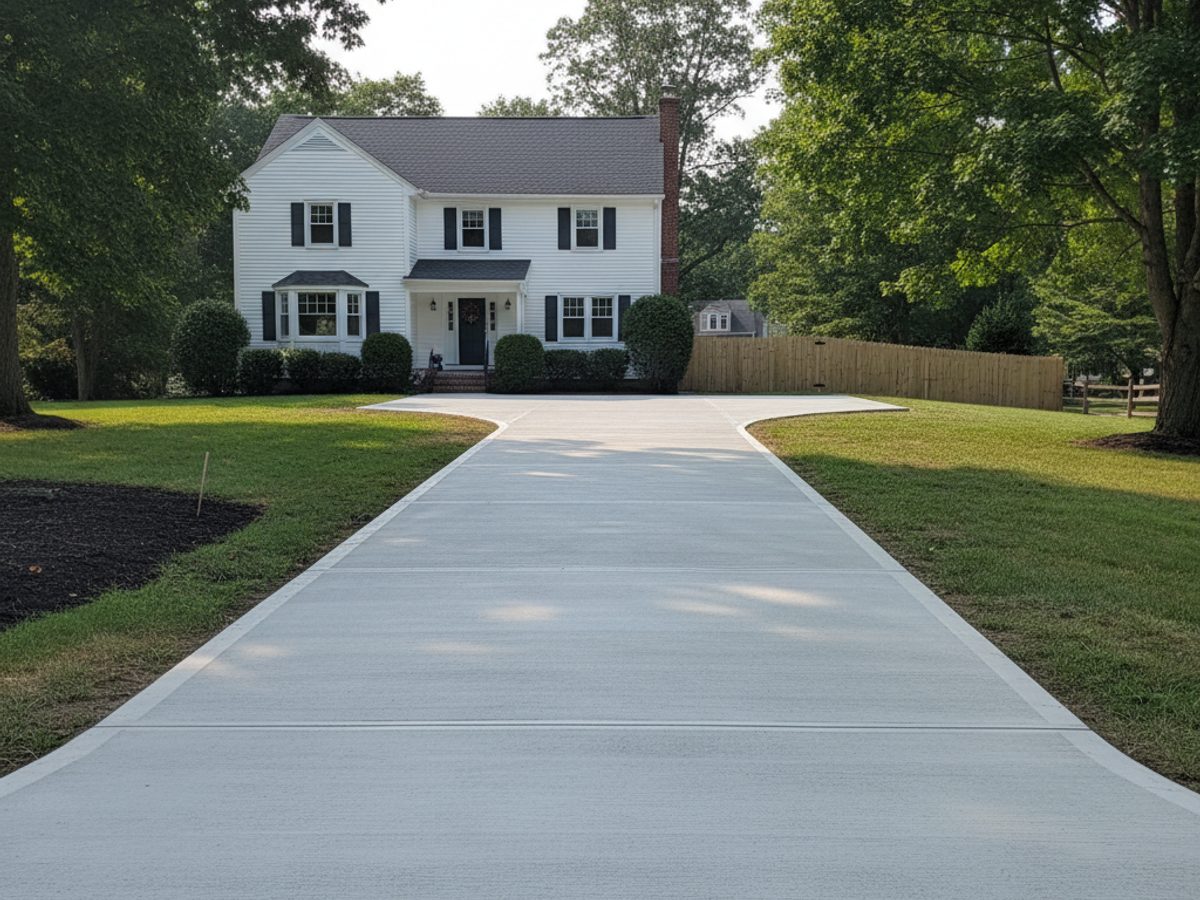
We form, pour and finish driveways to handle car weight and New England winters, usually 4 inches thick with fiber mesh or rebar depending on the soil. We slope the pour so water runs to the street instead of pooling by your garage door.

Concrete Patios

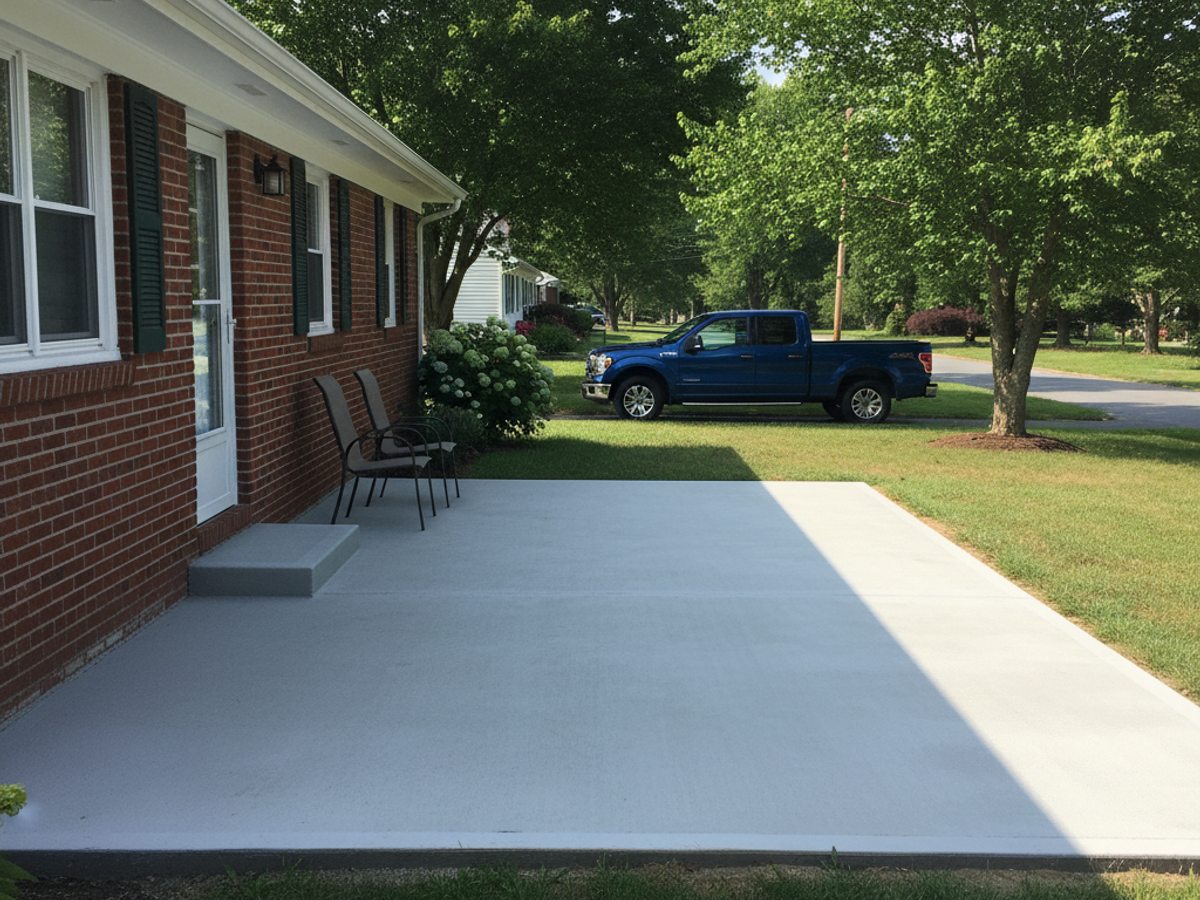
Patios get a broom finish or a stamped pattern, poured over a compacted gravel base so they don't heave with the frost. We set control joints every 8 to 10 feet to control where cracking happens.

Stamped Concrete

Stamped concrete gets you the look of brick, slate or cobblestone without the joints that shift and grow weeds over time. We color and seal it the same week we pour, while the surface still takes the sealer evenly.

Concrete Walkways

Walkways run 3 to 4 inches thick with a light broom finish for grip in wet weather. We keep the width and slope consistent so they don't puddle after rain.

Concrete Steps & Stairs

Front steps and stairs need to meet local rise and run codes, and we form them so each step comes out even, not slightly off like a lot of DIY pours end up. Icy steps are a liability, so we texture the tread surface enough to grip a boot.

Concrete Repair

Cracked, spalled or settled concrete usually doesn't need a full tear-out. We patch, resurface or mud-jack sections back level, and we'll tell you upfront if the slab is too far gone to save.

Retaining Walls

Retaining walls hold back soil on sloped yards, and we build the drainage into the wall itself so water pressure doesn't push it out of plumb. Poured concrete or block, depending on the height and what the yard is doing.

Garage Floor Concrete

Garage floors take oil, salt and the weight of a parked car every day, so we pour thicker slabs and finish them smooth enough to seal or epoxy later. We slope it slightly toward the door so meltwater doesn't sit in the middle.

Concrete Slab Foundations

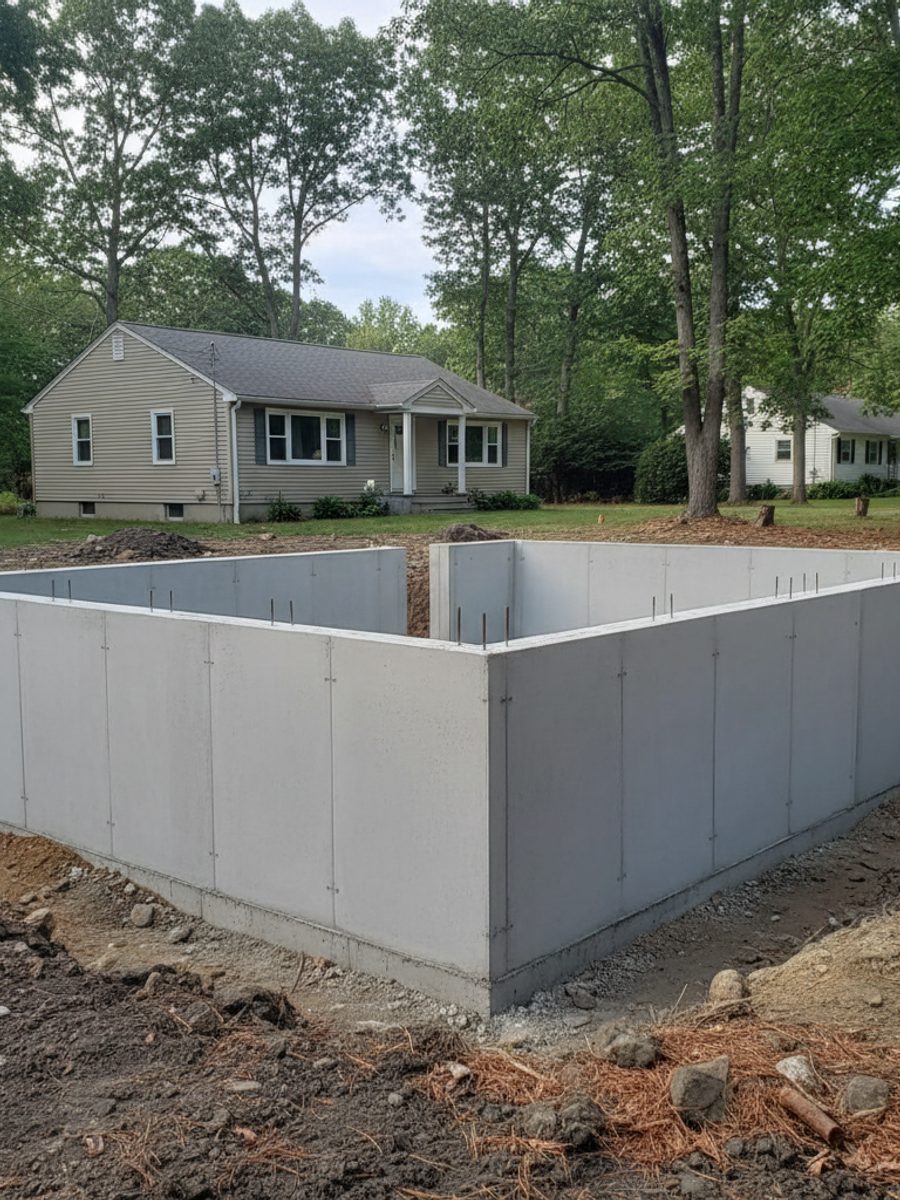
Slab foundations get poured over a footing and a vapor barrier, with rebar tied in before the pour, not dropped in after. We check the forms are square and level before a single truck shows up.

Concrete Sidewalk Installation

Sidewalks along the street have to meet the city's width and slope requirements, and we handle that paperwork as part of the job. We pour them thick enough to take foot traffic and plow blades without chipping at the edges.

How It Works

Four steps, and no surprises in any of them.

01

We come and look

You tell us what you want doing, we look at what is actually there, and we ask the awkward questions early.

02

You get a price

In writing, itemised, free. If something might add cost later we flag it now rather than at the end.

03

We do the work

Same crew throughout. We cover your floors, keep the dust down and tidy up before we leave each day.

04

We walk it with you

You point out anything you are not happy with and we fix it before the invoice, not after.

Where We Work

All of this, across Malden, MA

This is the area concrete crews and equipment typically cover without added travel cost.

Malden, MA
Boston, MA
Cambridge, MA
Lynn, MA
Quincy, MA
Somerville, MA
Revere, MA
Medford, MA
Everett, MA
Chelsea, MA
Melrose, MA
Common Questions

Things worth asking

Questions that tend to come up once a project is actually underway.

Do I need a permit for a new driveway or patio?
A permit is usually required for new driveway installations, foundation work and retaining walls over a certain height, but not always for a simple patio replacement. Local building departments vary, and permit filing is typically handled as part of the job.
How long does a concrete driveway take from start to finish?
A typical driveway takes one to two days to form and pour, plus 3 to 5 days before it can handle car traffic and about 28 days to fully cure. Larger or more complex pours with steps or drainage work take longer.
Can concrete work be done on a tight budget?
Plain broom-finished concrete costs less than stamped or colored concrete, and reusing an existing base where possible also cuts cost. Breaking a larger project into phases is another way to manage budget on a concrete job.
What kind of guarantee comes with concrete work?
Workmanship guarantees vary by contractor, but reputable concrete work typically comes with a written warranty covering cracking or settling caused by installation error. Cracking from normal expansion and contraction is expected and usually isn't covered, since concrete moves with temperature.
Who will I be dealing with day to day during the project?
On most concrete jobs, the crew lead on site is the main point of contact for questions once work begins. Larger projects involving permits or engineering may also include occasional check-ins from a project manager.
What materials are used for driveways and patios?
Standard concrete mixes run around 3,500 to 4,000 PSI for residential driveways and patios, reinforced with either fiber mesh or steel rebar depending on the load. Stamped or colored jobs use the same base mix with an integral color and a release agent for texture.
Can I still walk on my patio or use my driveway while the concrete cures?
Foot traffic is generally safe after about 24 to 48 hours, but driving on a new driveway should wait 5 to 7 days minimum. Full cure takes closer to 28 days, which matters for anything heavier like an RV or dumpster.
How should I prepare the site before the crew arrives?
Clearing vehicles, outdoor furniture and anything stored near the work area makes the biggest difference before a concrete crew arrives. Access for a concrete truck and any nearby sprinkler lines or utilities should also be pointed out ahead of time.
What happens if you find a problem once the old concrete is removed?
Sometimes soft soil, an old buried slab or drainage issues turn up once existing concrete is broken out. When that happens, the base gets corrected before pouring, which can add a day and a modest cost, but it's explained before work continues.
How do I take care of new concrete after it's poured?
New concrete should be kept off for the first few days and sealed within the first year to resist salt and water staining. Reapplying sealer every 2 to 3 years and avoiding rock salt deicers extends the life of the surface significantly.

Not sure what you need?

Describe the problem and we will tell you what it probably is. No obligation.

Call (339) 444-2769