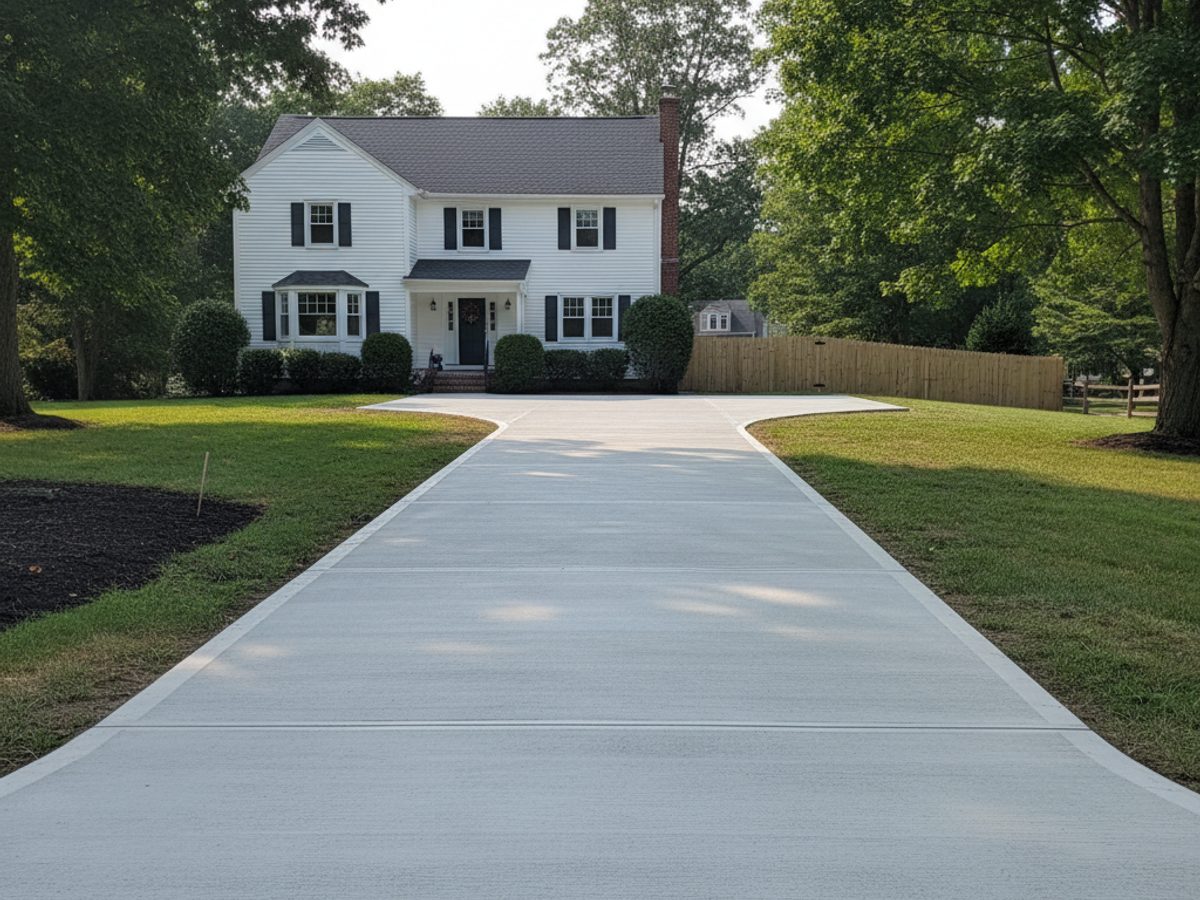
Malden sits on a mix of glacial till and pockets of clay, with ledge close to the surface in plenty of yards, especially up toward the Fells side of town. That matters before you ever get to picking a color for a stamped patio. A contractor who doesn't ask what's under your lawn, or who quotes a driveway price over the phone without seeing the site, is guessing. And in this town, guessing gets expensive once a jackhammer hits rock two feet down.
Why the ground here changes the job
Older streets in Edgeworth, Faulkner, and around the Malden River flats often have fill soil under the top few inches, sometimes going back to when triple-deckers went up here in the 1900s to 1920s. Fill compacts unevenly. A slab poured on unprepared fill will crack within a year or two, not because the concrete was bad but because the ground under it moved. A contractor who knows Malden will bring in gravel base, usually 4 to 6 inches of compacted crushed stone, and actually compact it in lifts rather than dumping it and calling it done.
Then there's frost. Massachusetts frost depth runs around 42 to 48 inches, and any footing that's supposed to hold weight year-round, like a foundation wall or a set of exterior steps, needs to sit below that line or it will heave. A slab-on-grade patio doesn't need to go that deep, but a footing for a retaining wall or a frost wall for an addition does. If a bid doesn't mention footing depth at all, ask.
License and insurance, and what those words actually cover
In Massachusetts, anyone doing residential work over $1,000 is supposed to be registered as a Home Improvement Contractor with the state. That's separate from a Construction Supervisor License, which is required for certain permitted structural work. Ask for the HIC number and check it's current. Ask for a certificate of insurance showing general liability, not just a business card that says "insured." If a piece of rebar goes through a gas line or a mixer truck cracks your neighbor's sidewalk, you want to know there's a policy behind it, not a promise.
Workers' comp matters too. A lot of small concrete crews are three or four guys, and if one gets hurt on your property without coverage, that liability can land on you as the homeowner.
Permits, inspections, and the parts people skip
Malden's building department issues permits for slab foundations, retaining walls over a certain height, and most structural concrete work. A poured patio or a walkway usually doesn't need one, but a retaining wall holding back more than a few feet of soil often does, because if it fails it can take part of the yard with it. Sidewalk work is its own thing here: the sidewalk in front of your house is technically city property, and replacing or repairing it typically needs a permit through the DPW, plus notice if you're closing off part of the walk during the pour.
For anything near a property line, a decent contractor will ask about your lot survey or at least eyeball the stakes before digging, especially on the older, narrower lots common in Malden where six inches one way or the other actually matters. If a contractor tells you permits are "not really necessary" for a job that clearly needs one, that's not them saving you money. That's them betting you won't find out until the inspector does.
What a real bid looks like
A serious quote spells out thickness, reinforcement, and mix strength, not just square footage and a price. For a driveway that'll take a car every day through a New England winter, you want at minimum a 4-inch slab, often 5 or 6 for anything that'll see a truck or trailer, with either rebar on a grid or fiber mesh mixed in. Rebar costs more and holds a crack together better if one forms. Mesh is cheaper and fine for a lot of walkways and patios, but it's not the same thing, and a contractor swapping one for the other without telling you is cutting corners you're paying full price for.
Ask about the mix itself. Concrete here should be air-entrained, meaning tiny air bubbles are worked into the mix so it can handle freeze-thaw cycling without the surface flaking off, which is called scaling. Malden gets a real winter, usually somewhere around 30 to 40 freeze-thaw cycles a season, so a mix that isn't air-entrained will show it within a few winters as pitting on the surface.
Control joints should be part of the plan too, cut every 8 to 10 feet on a driveway slab, usually within 24 hours of the pour, before the concrete decides where it wants to crack on its own. And ask how long before you can drive on it. Concrete gains most of its strength in the first week but isn't ready for vehicle weight until it's cured for at least 7 days, sometimes longer if the weather's cold and slow.
Red flags worth walking away from
- Asking for full payment upfront, before any material is delivered. A deposit is normal. The whole job, paid before a shovel hits dirt, is not.
- No written contract, or one that's just a price with no scope, no thickness, no mix spec.
- A bid dramatically lower than two or three others for the same described job. Concrete, gravel, and labor cost roughly the same no matter who's pouring it. A number way under the others usually means something's getting skipped, thinner base, no rebar, no permit.
- Pressure to sign the same day the estimate happens, especially with a discount attached to signing fast.
- Reluctance to talk about the soil on your specific lot or to walk the yard before quoting.
What to ask before you sign anything
Get three things in writing: the slab thickness and reinforcement type, the mix strength in PSI (4,000 PSI air-entrained is a common standard for exterior work in this climate), and who's pulling any required permit. Ask what happens if they hit ledge during excavation, since that's not rare in this part of Middlesex County, and find out ahead of time whether that's an extra cost or built into the bid. A contractor who's done work around Malden and the nearby towns should be able to answer all of this without hesitating, because they've hit these exact conditions before.
We've handled driveways, walkways, patios, steps, and foundation work across Malden and the surrounding towns, and a lot of what separates a slab that lasts twenty years from one that's cracked in three comes down to the decisions made before the truck ever shows up. If you want a second opinion on a bid you've already got, or you're starting from scratch, take a look at Heritage Concrete Solutions and what we've worked on locally.